
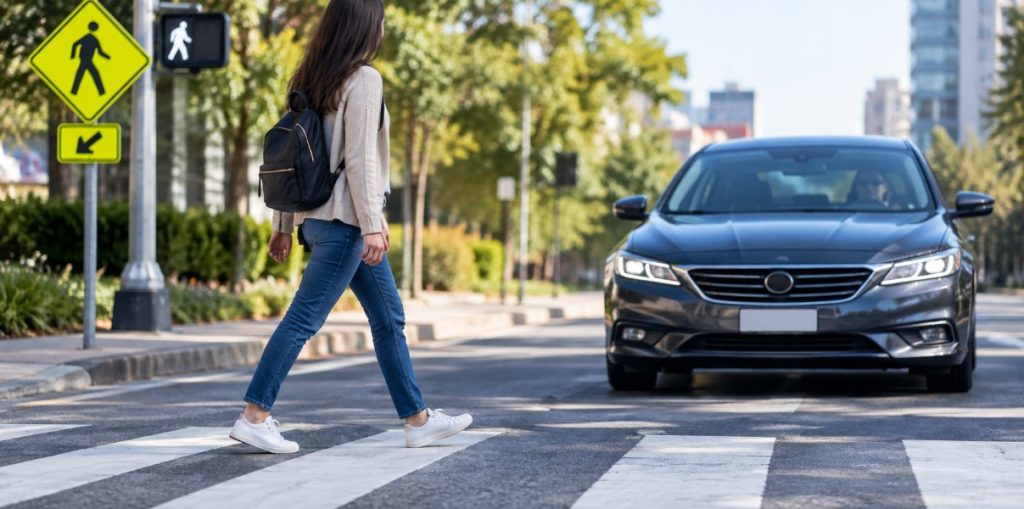
A crosswalk is designed to give pedestrians a safer place to cross, but determining fault after a crash is not always automatic. The driver may be responsible for failing to yield, speeding, turning without checking, or driving while distracted. However, a pedestrian can also share responsibility in certain situations, such as crossing against a signal or suddenly stepping into traffic. Fetterman Law can help injured people understand how the facts of a crash may affect their legal options.
The exact rules depend on the state where the collision occurred. Evidence such as traffic signals, witness statements, surveillance video, vehicle damage, photographs, medical records, and the police report can help establish what happened. In Florida, for example, drivers generally must yield to pedestrians crossing within a crosswalk under the circumstances described in state law.
The most important point is that being hit in a crosswalk does not automatically answer every question about fault. The circumstances surrounding the collision matter, including what the driver and pedestrian were doing immediately before impact.
When The Driver May Be At Fault
Drivers have an important responsibility to watch for people crossing the road. A crosswalk gives drivers a clear place where they should expect pedestrians, particularly at intersections, traffic signals, school areas, shopping districts, and other busy locations.
A driver may be considered responsible when they fail to use reasonable care and their actions contribute to the collision. Traffic laws also establish situations where drivers must yield to pedestrians.
Common examples include:
- Failing to yield: A driver enters a crosswalk while a pedestrian has the right-of-way.
- Speeding: A vehicle is traveling too fast to stop safely for someone crossing.
- Distracted driving: The driver is looking at a phone, adjusting controls, or otherwise not paying attention.
- Turning into a pedestrian: A driver makes a left or right turn without properly checking the crosswalk.
- Ignoring traffic signals: The driver proceeds through a signal or sign when stopping is required.
- Passing another stopped vehicle: The driver goes around a vehicle stopped for a pedestrian and strikes someone they could not see.
- Driving while impaired: Alcohol or drugs affect the driver’s ability to react appropriately.
The National Highway Traffic Safety Administration advises drivers to yield to pedestrians in crosswalks, slow down when approaching them, and avoid passing vehicles stopped at a crosswalk.
When A Pedestrian May Share Fault
Being in a crosswalk does not mean a pedestrian can ignore traffic signals or enter the roadway without considering nearby vehicles. Pedestrians also have responsibilities under traffic laws, and those responsibilities can become important when fault is disputed.
A pedestrian may potentially share some responsibility if their actions contributed to the crash. The specific rules vary by state, so the facts should be reviewed under the law that applies to the collision.
Examples may include:
- Crossing against a signal: The pedestrian enters the roadway when a pedestrian signal prohibits crossing.
- Suddenly entering traffic: The pedestrian moves into the path of a vehicle so closely that the driver has no reasonable opportunity to stop.
- Crossing outside a permitted area: The pedestrian crosses where applicable law requires them to yield to vehicles.
- Ignoring traffic controls: The pedestrian does not follow a sign, signal, or other instruction governing the crossing.
- Moving unpredictably: The pedestrian’s actions make it difficult for a reasonably careful driver to respond.
Florida law, for example, says a pedestrian must not suddenly leave a curb or other place of safety and enter the path of a vehicle that is so close the driver cannot yield. The statute also provides specific right-of-way rules for pedestrians crossing within crosswalks.
How Fault Is Determined After A Crosswalk Crash
Determining fault usually requires looking at the entire sequence of events rather than focusing on one fact. Investigators, insurers, and attorneys may examine what happened before, during, and immediately after the collision.
A person may appear to have the right-of-way, but other evidence can still affect how responsibility is assigned. Likewise, an allegation that a pedestrian was partly responsible does not necessarily mean the pedestrian cannot pursue compensation.
Important evidence can include:
- Police reports: The report may document statements, road conditions, traffic controls, and the officer’s observations.
- Traffic camera footage: Video can show vehicle movement, pedestrian position, signals, and timing.
- Surveillance footage: Nearby businesses or properties may have cameras covering the intersection.
- Witness statements: Independent witnesses may help clarify what happened before impact.
- Vehicle damage: Damage patterns may provide useful information about the point and force of impact.
- Photographs: Images can document the crosswalk, traffic signals, roadway conditions, and visible injuries.
- Medical records: Treatment records can document the nature and extent of injuries.
- Phone or electronic records: In some cases, evidence may help establish whether a driver was distracted.
NHTSA crash investigations recognize the importance of police reports, vehicle information, interviews, and medical records when examining pedestrian crashes.
If you want to understand how a serious crosswalk collision can unfold, this report on a pedestrian struck in a Sebastian crosswalk and seriously injured provides a useful real-world example of the issues that can arise after a pedestrian crash.
How Shared Fault Can Affect A Claim
Not every collision fits neatly into a situation where one person is completely responsible. In some cases, evidence may show that both the driver and pedestrian contributed to the crash.
For example, a driver may have been speeding while a pedestrian was crossing in a way that violated a traffic signal. The legal question may then involve how much each person’s conduct contributed to the injuries.
In Florida, the comparative fault statute provides that a claimant’s own contributory fault can reduce damages proportionately. The law also provides for allocating responsibility among parties based on their percentage of fault.
This means allegations of shared responsibility should be taken seriously, but they should not automatically discourage an injured pedestrian from seeking legal advice.
A pedestrian accident law firm can review the evidence and explain how applicable fault rules may affect a potential claim. The outcome depends on the specific facts, available evidence, applicable state law, and the extent of the injuries.
Why Crosswalk Evidence Matters So Much
Evidence can disappear quickly after a crash. Surveillance footage may be overwritten, vehicles may be repaired, witnesses may become difficult to locate, and memories may become less precise as time passes.
That makes early documentation particularly valuable when a pedestrian is injured. Even seemingly minor details can become important when different versions of the collision emerge later.
Useful steps may include:
- Get medical attention: Seek appropriate medical care even when an injury initially seems manageable.
- Report the collision: Make sure the incident is reported to the appropriate authorities.
- Document the scene: Photograph the crosswalk, signals, roadway, vehicles, surroundings, and visible injuries when possible.
- Identify witnesses: Keep the names and contact details of people who saw the collision.
- Preserve records: Keep medical documents, prescriptions, bills, correspondence, and other relevant paperwork.
- Avoid speculation: Stick to what you know happened instead of guessing about fault.
- Preserve digital evidence: Save relevant photographs, messages, videos, and other electronic information.
NHTSA recommends remaining alert around traffic and emphasizes that pedestrians should not assume a driver has seen them simply because they can see the driver.
What If The Driver Leaves The Scene?
A hit-and-run can make an already difficult situation even more stressful. A pedestrian may be left trying to identify a vehicle while also dealing with serious physical injuries.
Leaving the scene does not necessarily mean there is no way to investigate what happened. Witnesses, nearby security cameras, traffic cameras, vehicle descriptions, license plate information, and physical evidence may help identify the driver.
If you are able to do so safely, record as many details as possible. The vehicle’s color, make, model, direction of travel, approximate time of the crash, and identifying features can all potentially help.
A personal injury lawyer in Boca Raton may also help an injured pedestrian understand what evidence should be preserved and what legal options may be available under Florida law.
What Compensation May Be Available?
A pedestrian who suffers injuries because of another person’s negligence may be able to pursue compensation for different losses. The categories and availability of damages depend on the circumstances and the law that applies to the claim.
The value of a claim should not be determined simply by looking at one medical bill. Serious injuries can affect a person’s ability to work, perform daily activities, enjoy life, and manage future medical needs.
Potential areas of compensation may include:
- Medical treatment: Costs associated with emergency care, hospitalization, rehabilitation, medication, and other necessary treatment.
- Lost income: Time away from work may create financial losses after a serious collision.
- Reduced earning ability: Certain injuries can affect a person’s ability to work in the future.
- Pain and suffering: Physical pain and emotional distress may form part of a personal injury claim.
- Long-term care: Some serious injuries may require continuing treatment, therapy, or assistance.
- Loss of normal activities: A significant injury can interfere with hobbies, family life, and everyday activities.
Florida law recognizes economic and noneconomic damages in negligence actions and provides for damages to be apportioned according to applicable fault rules.
When Should You Speak With A Lawyer?
It can be useful to seek legal guidance when injuries are serious, fault is disputed, the driver left the scene, an insurance company challenges the claim, or long-term medical treatment may be necessary.
You do not need to wait until every detail of your recovery is known before asking questions about your rights. Early legal guidance can help with preserving evidence and understanding the process.
A pedestrian accident attorney may review the police report, medical records, photographs, witness information, video footage, insurance communications, and other available evidence.
The sooner relevant evidence is identified and preserved, the easier it may be to build a clear picture of what happened.
A Crosswalk Does Not Make Every Case Automatic
A pedestrian hit inside a crosswalk may have important protections under traffic laws, but determining legal responsibility requires more than simply identifying the location of the crash. Driver behavior, pedestrian actions, traffic signals, visibility, road conditions, witness accounts, and other evidence can all matter.
The strongest claims are generally supported by clear evidence showing what happened and how the collision caused the injuries. Taking steps to preserve that evidence can make a significant difference when fault is disputed.
Fetterman Law can help injured pedestrians understand the circumstances surrounding a collision and explore the legal options that may be available. Contact us today to discuss your situation and learn what steps may be appropriate for your case.


